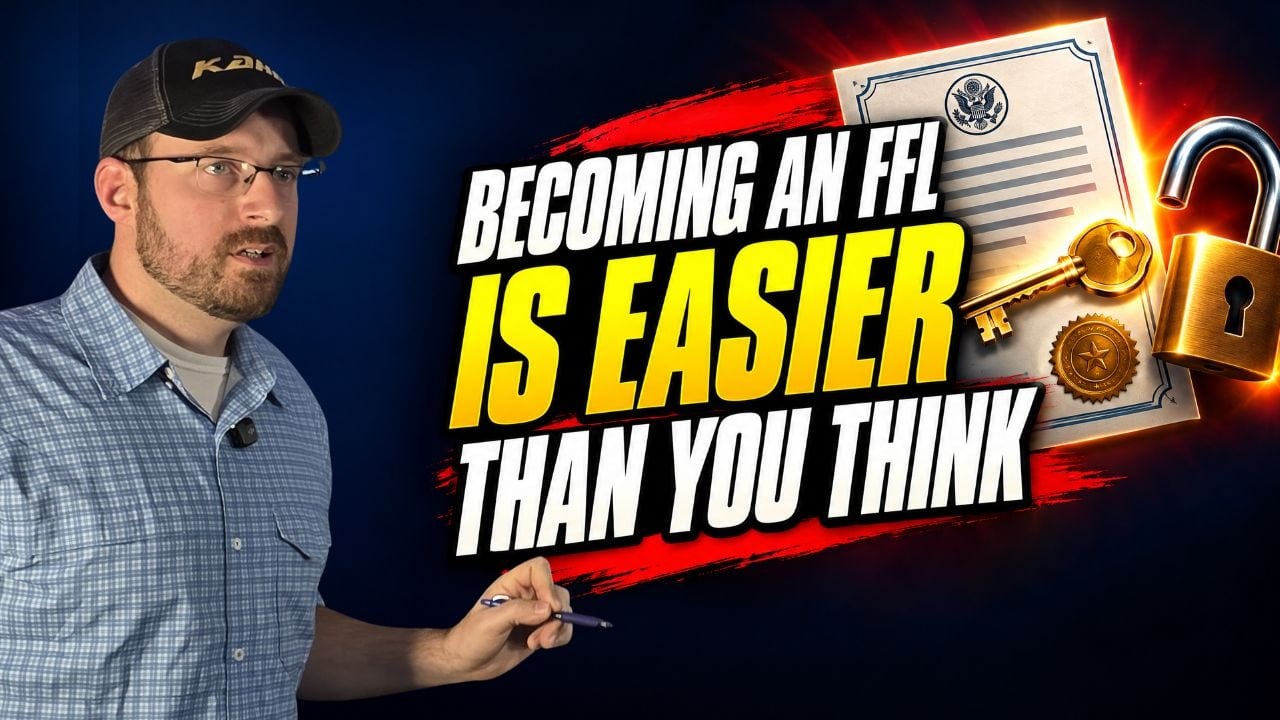
Becoming a Federal Firearms Licensee, or FFL, can open a new chapter for firearm instructors who want to build a broader business around their students. Instead of stopping at the class, an instructor with the right licensing and compliance structure may be able to support more of the customer journey, from training and gear to firearm sales, transfers, and ongoing memberships.
In this coaching call, the discussion covered why an FFL can be valuable, what the federal application process may involve, and where state and local rules create additional requirements. The goal was not to suggest that every instructor should become a dealer, but to show why the process may be more approachable than many instructors assume.
Important: Firearms licensing and transfer requirements can change and vary by jurisdiction. Treat the points below as a summary of the coaching call, not legal advice. Verify current requirements directly with the ATF, your state, and your local authorities before applying or offering regulated services.
Why an FFL Can Expand the Student Journey
The coaching call described an FFL as a way to create a more complete retail path for students. An instructor who already helps people become safer and more confident with firearms may also be able to offer relevant gear, ammunition, firearms, memberships, and additional training opportunities, subject to all applicable laws and business requirements.
That broader offer can make advanced packages more compelling. The speaker gave the example of pairing a training package with a free or discounted handgun at an approximate wholesale cost of $200. The point was not to use a firearm as a gimmick, but to show how an instructor could build a higher-value offer when the business is properly licensed and the package is structured lawfully.
The same customer journey can also support better follow-up. The call highlighted Momentum HQ calendar settings that allow a student to register a guest, with options for the guest to pay separately or receive a BOGO or discounted rate. A bring-a-friend promotion with a small deposit can move word-of-mouth activity earlier in the acquisition process, turning an existing customer relationship into a structured marketing opportunity.
What the Call Covered About Facebook and Instagram
The discussion also addressed organic social media posting. The speaker explained that licensed FFL dealers may have more room to post and sell firearms organically on business pages, while some account restrictions occur because a platform does not recognize the user as an authorized dealer.
The suggested compliance setup was to clearly state on the Facebook page About section and business bio that the company is a licensed FFL doing business lawfully in the United States and following all applicable laws for firearm sales and transfers. The speaker also recommended using a similar disclaimer in organic firearm post captions when appropriate.
Paid advertising is different. The call emphasized that paid ads directly promoting firearms, ammunition, or weapons remain prohibited on Facebook, so paid campaigns should focus on training services instead. Platform policies change, so confirm the current rules before publishing or advertising.
The Federal FFL Requirements Discussed
The federal requirements were presented as more straightforward than many instructors expect. The coaching call described the basic requirement as having a permanent business location with four walls and a roof, and operating as a legitimate commercial entity rather than using the license purely for personal firearm acquisitions.
The speaker said that security cameras, alarm systems, and safes are recommended, but are not necessarily federal requirements in every situation. That distinction matters, because federal requirements are only one part of the approval process. State, county, and municipal rules may add zoning, home-occupation, inventory, or other requirements.
A Practical Application Strategy
The recommended approach was to apply directly to the ATF first rather than trying to resolve every possible local question before submitting an application. The application fee discussed on the call was $200. Submitting the federal application can prompt the ATF inspector to identify the specific state and local requirements that must be satisfied for approval.
The call also covered several practical filing points:
- Applicants may be able to correct minor application issues in person during the interview process.
- A copy of the application should be mailed to the local Sheriff or other Chief Law Enforcement Officer, or CLEO. The speaker explained that a formal sign-off or return receipt is not necessarily required.
- Applicants should list realistic, limited operating hours if they are operating by appointment. The call used Saturdays from 10:00 AM to 12:00 PM as an example, but the hours must accurately reflect the business.
- FFL holders must maintain acquisition and disposition, or A&D, records that document where firearms came from, what they are, and where they went. The call stated that these records are held for 20 years.
Because application forms, recordkeeping obligations, and inspection rules are consequential, applicants should confirm the current instructions and requirements with the ATF before submitting anything.
State and Local Rules Can Be the Real Hurdle
The coaching call noted that the most difficult part is often not the federal form, but local zoning and home-based business restrictions. California, Illinois, New Jersey, and other strict jurisdictions may have additional rules that affect whether a location can be used for the business.
The speaker also discussed examples involving Maryland and Florida, where a local home-business ordinance may limit inventory even when state-level firearm preemption or an appointment-only operating model changes the analysis. These examples reinforce the need to check the exact rules for the location, rather than assuming that a federal license automatically overrides local requirements.
Why Gun Shows May Not Be the Best Long-Term Channel
The call discouraged relying on gun shows as the primary growth strategy. Buyers at shows often shop mainly on price, which can create thin margins and little long-term brand or list-building value.
For a home-based FFL that primarily serves its own students, the speaker recommended being intentional about transfer volume. Instructors may want to remove themselves from public transfer databases such as GrabAGun or Primary Arms so random third-party shipments do not arrive at their homes. The right approach depends on the business model and local requirements, so confirm the operational and compliance implications first.
The Operational Lessons for Firearm Instructors
The community wins discussed during the call offered a useful reminder that business growth is not only about licensing. Steve turned a hunter emergency readiness class into a new speaking opportunity after a notable attendee left a five-star review, and he filled half of an upcoming pistol class through active sales funnels. Mark from Firearm Training Colorado handled a presentation problem by moving into hands-on loading drills and range training, then secured his first $1,000 advanced-program signup after making the offer.
Those examples connect back to the FFL discussion. Licensing can expand what an instructor is able to offer, but the business still needs a clear offer, reliable follow-up, strong delivery, and a sales process that turns satisfied students into repeat customers and referrals.
Is Becoming an FFL Right for You?
The answer depends on your location, goals, operating model, and willingness to maintain compliance records over time. An FFL may make sense for an instructor who wants to build a more complete firearm business, serve existing students through transfers, and create higher-value training packages. It may not make sense for someone who only wants to acquire firearms personally or who cannot satisfy local business and zoning requirements.
Start by defining the business model, checking local rules, and confirming current ATF requirements. Then decide whether the additional responsibilities support the kind of firearm instruction business you want to build.
Watch the Coaching Call
Watch the full coaching call above for the complete discussion on becoming an FFL, organic social media posting, application strategy, recordkeeping, state-specific considerations, and the operational choices that can help a firearm instructor build a stronger business.











Leave a Reply