



Most businesses do not need more traffic before they need a better customer journey. When the experience, message, offer, and follow-up work together, a relatively small advertising budget can create both immediate revenue and long-term customers.
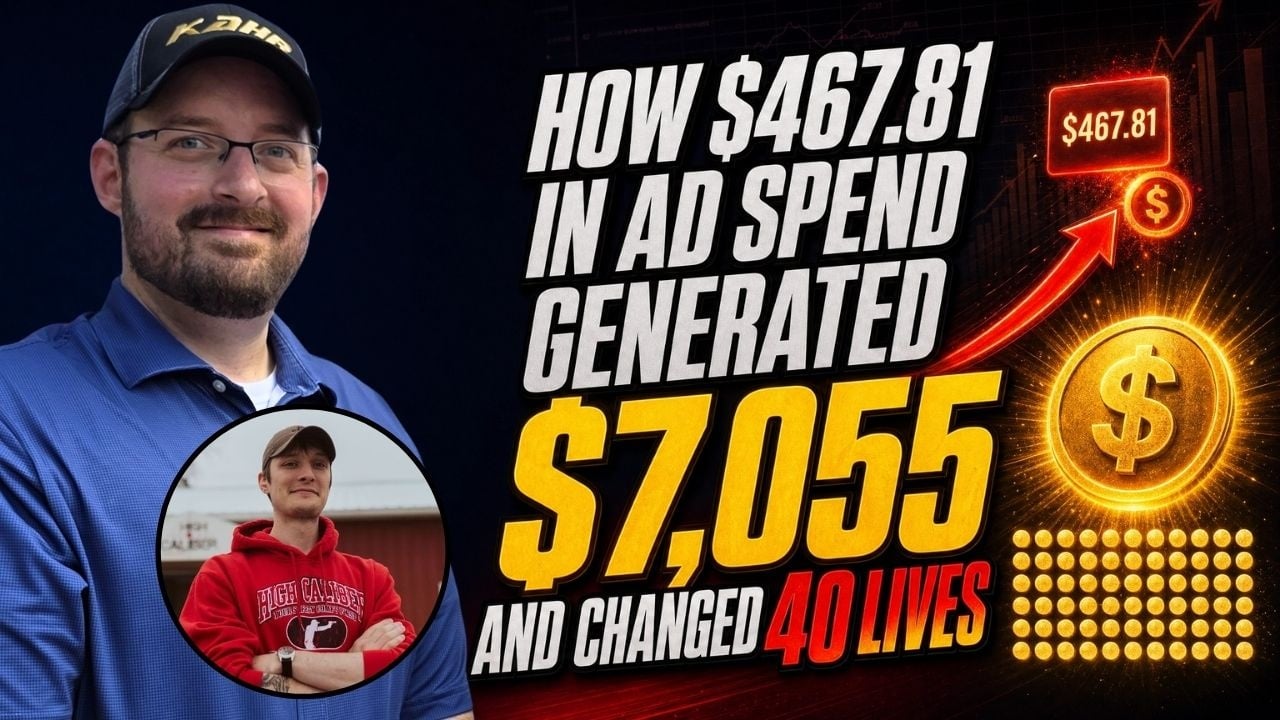
In this coaching call, the team breaks down how $467.81 in Facebook ad spend produced 29 paid registrations, 40 total attendees, $1,073 in upfront revenue, and $5,982 in Defender program contract value. The result was more than $7,055 in total revenue and a roughly 15x return on the original ad spend.
The $467.81 Case Study
The Ladies Night event ran from August 3 through August 18. The campaign generated 29 paid registrations at an average cost of $16.13 each, while the ads produced a click-through rate of nearly 5%.
Each registration cost $37, creating $1,073 in immediate revenue before the event started. The offer also included a bring-a-friend-for-free incentive, which turned 29 paid registrations into 40 people attending in person.
At the end of the event, six attendees accepted the invitation to the Defender program. That represented a 15% closing rate and added $5,982 in contract value. When the front-end registrations and back-end program revenue were combined, the campaign generated more than $7,055 from $467.81 in ad spend.
The power of the case study becomes clearer when compared with an open house held the following Saturday. That event attracted 160 attendees but produced only three memberships because the team skipped the final two building blocks of the H30K method.
Attendance alone is not the goal. An acquisition event must intentionally move people from attention, to experience, to meaning, to transformation, to a clear invitation.
The H30K Method: Five Building Blocks
1. Experience
The experience must feel intentional from the first moment a prospect sees the ad until the moment they leave the facility. The Facebook ad spoke directly to people who wanted to learn to shoot without feeling judged or intimidated. That same message continued on the custom landing page, which created consistency and trust.
When guests arrived, a large whiteboard welcomed new ladies and immediately confirmed that they were in the right place. A membership coordinator greeted them at the door and provided name tags on both the front and back, making it easier for instructors to connect with them on the range.
Staff then personally guided guests through the facility, including the rental counter, shooting lanes, and retail area. The tour ended in a classroom with fresh-baked cookies and handheld charcuterie boards. Those details were not random. They made the event feel personal, welcoming, and designed for the people who had registered.
2. Meaning
A successful event needs a purpose that goes beyond a transaction. During a short introductory talk, the instructor established two layers of meaning: learning safety skills to reduce firearm anxiety, and joining a community of people with shared interests.
That framing changes the event from a one-time activity into the first step of a lifestyle and identity. People are more likely to continue when they understand what the experience means, not just what they are being asked to buy.
3. Transformation
Transformation is the first meaningful win. In this room, about 30 of the 40 women had never fired a weapon. Within roughly 90 minutes, they had moved from uncertainty to successfully firing a firearm.
The instructor also used framing to make the accomplishment feel like a real skill. Instead of describing the activity as 12 individual rounds, the class taught a dynamic double-tap drill, two rounds completed six times. The same physical activity felt more purposeful because it was presented as a skill that could be learned and repeated.
4. Journey
The event should not feel like a finish line. Before presenting a high-ticket offer, the instructor reframed the initial experience as the first step of a larger journey.
After the positive energy on the range, guests returned to the sales floor. The conversation moved away from simply taking more classes and toward an inspiring destination, becoming a high-caliber defender. That shift gave the offer a larger meaning and helped attendees see why the next step mattered.
5. Invitation
The invitation belongs after the experience, meaning, transformation, and journey have been established. The Defender offer included seven core classes, including Pistol 1, Pistol 2, holster training, cleaning, malfunctions, and private instruction.
Day-only bonuses added urgency and increased the value of the offer. These included a concealed-carry course, free concealed-carry renewals for life, a waived membership initiation fee, and a tangible membership welcome package.
The combined real-world value was presented as more than $3,200, contrasted with a special today-only price of $997. The point was not to rush people with pressure. It was to give them a clear roadmap and a compelling reason to start that roadmap now.
The Four Points of Nurture
During the question-and-answer portion of the call, the group addressed low phone pick-up rates and low show-up rates. The solution was a four-point nurture framework:
- Volume: Increase the total number of calls, text messages, and emails when people are not showing up for commitments.
- Personalization: Use human confirmation calls to reduce anxiety, answer questions, and confirm details such as the name of an accompanying friend.
- Method: Start with the channel the prospect used. If the person began the conversation through Facebook Messenger, respond there before moving to text, phone, or email.
- Multi-channel follow-up: Apply the 10-minute rule by sending a targeted text about 10 minutes after an email, prompting the recipient to find and open it.
Tactical Automation and Calling Tips
Two practical follow-up tactics were also discussed. Double dialing means calling once, ending the call when it goes to voicemail, and dialing again immediately. The second attempt often reaches people who screen unfamiliar numbers.
When a manual call goes unanswered, the team can apply a called-no-answer tag inside Momentum HQ. That tag can trigger a pre-recorded voicemail and a matching personalized text, keeping the conversation moving without requiring every follow-up to be written from scratch.
Leading Through Business Change
Business growth often requires changing the way a team works. Employees naturally resist changes they do not understand, so the leader’s responsibility is to over-communicate the vision and repeatedly explain the future the company is building.
Leaders also have to make decisive team transitions. People who actively resist the direction of the business or bring a negative attitude into the customer experience can choke growth. The longer that misalignment remains, the more it affects the team and the customer.
One participant explained this with a kitchen recipe analogy. There may be dozens of prize-winning chicken-soup recipes, but while someone is working in your kitchen, they must follow your exact recipe. If they no longer want to follow it, you can help them pack their things. A system only works when the team is willing to execute it consistently.
The Real Lesson: Build the Whole System
The case study is not really about spending $467.81. It is about building a complete acquisition system around that spend. The ad created attention, the event delivered an intentional experience, the message created meaning, the range created transformation, the journey created desire, and the invitation converted that desire into a larger commitment.
Track the numbers across the entire funnel. Do not judge an event only by attendance, or an ad only by its first sale. Build the system, nurture the people who raise their hands, and make the next step clear.
Get armed, get trained, carry daily. Long live the Republic.





Leave a Reply