
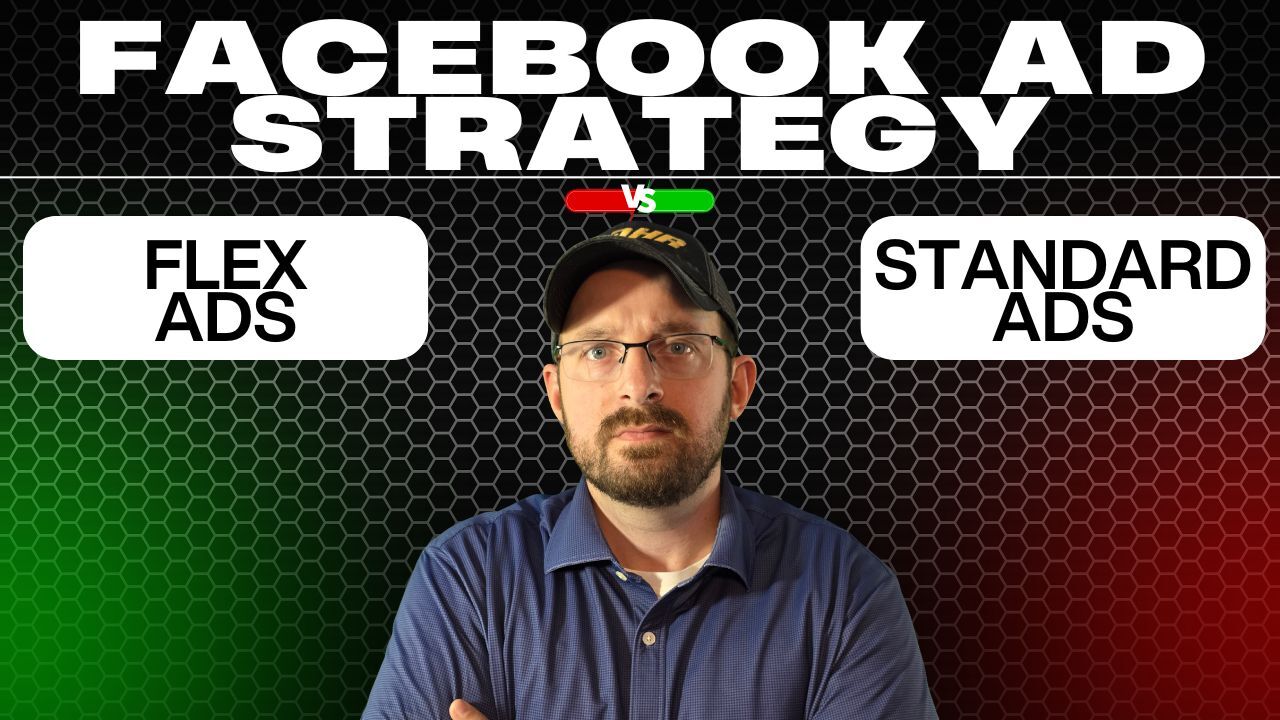



Facebook rolled out flex ads as the “easy button.” Upload multiple creatives, let the algorithm decide, and supposedly let Andromeda do the rest.
On paper, flex ads sound great.
In practice, they’ve cost me money, clarity, and control.
Here’s exactly why I’m shutting them down and going back to standard ads.
What Flex Ads Actually Do
A flex ad lets you upload multiple videos or images into a single ad. Facebook then mixes and matches creatives, headlines, primary text, and placements automatically.
The upside is speed. You can upload a bunch of content quickly without building separate ads.
The downside is everything else.
You lose visibility into what’s actually working.
The Real Problem With Flex Ads: You Learn Nothing
When a flex ad converts, you don’t know why.
You don’t know:
Which video caused the purchase
Which angle resonated
Which hook pulled someone in
Which creative deserves more spend
All you see is a blended result.
Marketing without feedback is gambling. I’m not interested in gambling with ad spend.
Flex Ads Cost Me More Per Sale
Looking at real numbers, flex ads were consistently more expensive.
Examples from the account:
$329 spent to sell a $4 book
$139 spent with zero sales
Multiple flex ads pushing cost per purchase well above acceptable levels
Meanwhile, standard ads gave me visibility into which videos and angles were driving conversions so I could scale what worked and kill what didn’t.
Flex ads removed that advantage.
What I Want From Every Ad
Every ad should give me at least one of three things:
Profit
Learning
An email address
Flex ads often gave me none of the three.
If an ad doesn’t make money, teach me something, or grow my list, it doesn’t earn its place in the account.
Why Standard Ads Still Win
Standard ads force discipline.
Each ad is:
One video or image
One angle
One hypothesis
That structure lets me:
Track cost per purchase by creative
Identify winning angles
Improve messaging
Scale intelligently
Yes, it takes more time to upload standard ads. That time is worth it because insight compounds.
How the Algorithm Actually Works
Facebook isn’t optimizing for “people.”
It’s optimizing for individuals.
When someone scrolls, Facebook chooses:
A creative
A headline
Primary text
A destination
Based on that specific person’s history.
The more variants you give Facebook within structure, the better it can assemble the right version for the right person.
That’s why I still use:
Multiple ads per ad set
Multiple primary texts
Multiple headlines
But each ad stays isolated so I can see what wins.
Flex Ads Remove Strategic Control
Flex ads save time but remove intent.
I don’t want Facebook guessing blindly while hiding the data from me.
I want to know:
Why someone bought
Which message worked
What to repeat
What to kill
Flex ads don’t give that.
My Decision Going Forward
I’m shutting down flex ads in my account.
I may test them again later, but right now:
They’re more expensive
They provide less insight
They slow learning
They reduce control
Standard ads win because they let me think, adjust, and scale with intention.
The Bigger Lesson
Facebook ads are not “set it and forget it.”
They’re:
Testing
Feedback
Iteration
Anything that removes learning from the process works against long-term growth.
Speed without insight is expensive.
Control wins.







Leave a Reply