
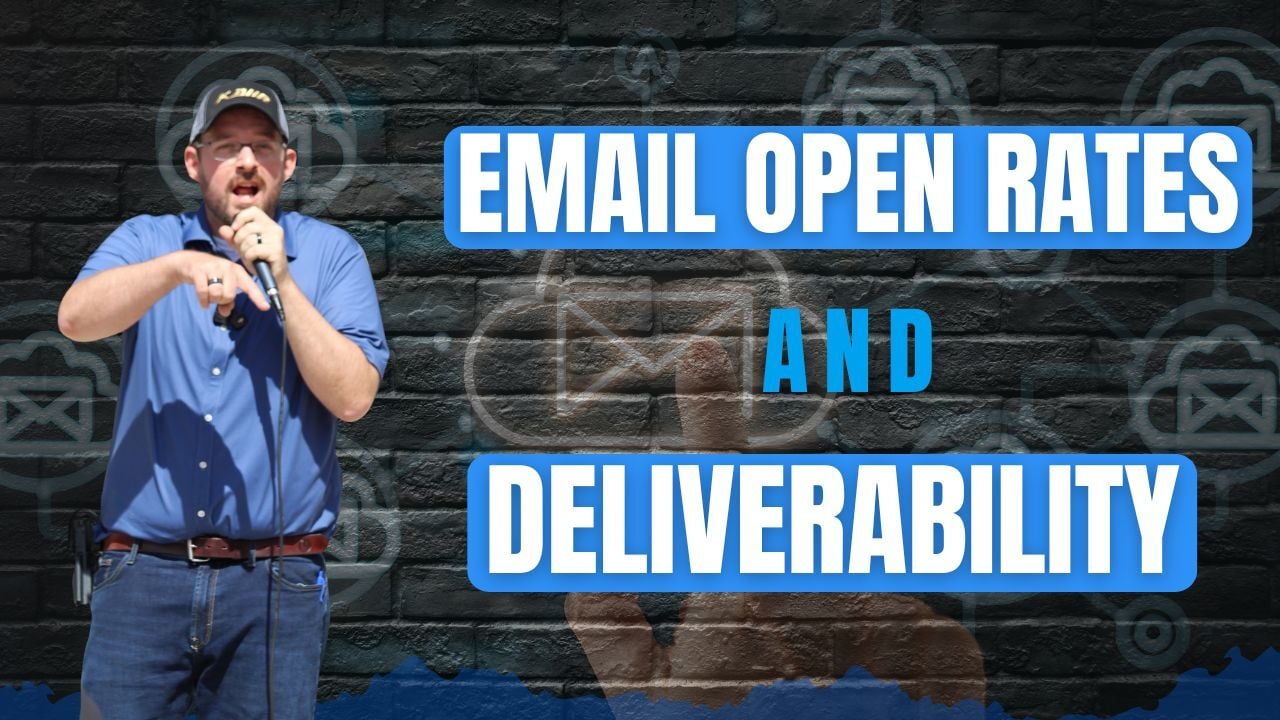



Email open rates were one of the biggest topics we covered, and for good reason. A lot of instructors and range owners are frustrated right now because they’re doing “everything right” and still seeing emails land in spam, open rates drop, or engagement fall off after migrating platforms.
The problem isn’t effort. The problem is misunderstanding how email works in 2026.
Let’s break this down exactly the way it was taught.
Open Rates Are an Unreliable Metric Now
The first thing to understand is that email open rates themselves are no longer a reliable measurement of success.
Apple and Android privacy changes have completely distorted open tracking. Many opens are artificially inflated, while others never register at all. That means you can see a “high” open rate that doesn’t convert, or a “low” open rate that still produces sales, replies, and bookings.
Open rates are something you glance at, not something you obsess over.
What actually matters are actions:
Replies
Clicks
Bookings
Purchases
Results beat metrics every time.
The #1 Rule: Send Emails Only to People Who Want Them
The fastest way to kill deliverability is sending emails to people who don’t want them.
Most lists are bloated. If you have 1,000 subscribers and only 20% open your emails, that means 800 people are signaling disinterest every time you send. That hurts your sender reputation.
The fix is simple and uncomfortable:
Only email people who have engaged in the last 90 days.
That applies everywhere:
Regular broadcasts
Weekly newsletters
Platform migrations
If you’re moving from Mailchimp, ActiveCampaign, or another system, only migrate contacts who have opened or engaged in the last 90 days. Everyone else stays behind. Starting smaller produces better long-term results than dragging dead weight into a new system.
Email platforms don’t reward list size. They reward engagement.
New Domains Reset Your Reputation
When you connect a new sending domain, the inbox providers don’t know you. Google, Yahoo, and AOL treat you like a brand-new sender, even if you’ve been emailing for years elsewhere.
That’s why emails that used to land in inboxes suddenly start going to spam after a migration.
This isn’t a platform failure. It’s how email reputation works.
The fix is warming and engagement:
Send to smaller engaged segments first
Have people open, reply, and move your emails from spam to inbox
Build trust again with inbox providers
The first email matters more than the tenth.
Replies Are a Deliverability Weapon
One of the strongest signals inbox providers look for is replies.
Replies tell Gmail and Apple Mail that your emails are wanted, read, and part of a real conversation.
That’s why asking for replies in emails is no longer optional.
It doesn’t need to be fancy. A single line at the bottom works:
“Did this help?”
“Let me know how this went.”
“Reply and tell me what you think.”
The more people reply, the better your future deliverability becomes.
Send Like a Human, Not a Machine
Mass-generated, templated emails are obvious now. People recognize AI-written emails instantly.
That hurts trust and engagement.
The winning approach is:
Use AI for structure, not final copy
Remove emojis, mirrored phrasing, and generic language
Write at a third-grade reading level
Make emails sound like one person talking to another person
If you wouldn’t send the email to a friend, don’t send it to your list.
Personalization doesn’t mean first-name tags. It means relevance, clarity, and human tone.
The Give-Ask Ratio Still Matters
Another major point was the give-ask ratio.
Three value emails for every one sales email.
That means:
Teaching
Tips
Insights
Useful information
Before asking for a purchase, booking, or call.
When every email asks for money, people stop opening. When emails consistently help, people stay engaged.
Use SMS to Support Email, Not Replace It
SMS isn’t the replacement for email. It’s the support system.
The smartest use of SMS is pairing it with first-time emails:
“I just sent you an email. Go check your inbox or spam folder.”
That one action dramatically improves future inbox placement.
Email is cheap and scalable. SMS is expensive. Use SMS strategically to activate email engagement, not replace it.
Shared IP vs Private IP
Most platforms use shared IP addresses. That means your deliverability is affected by other senders on the same IP.
A private IP costs extra, but it gives you control. Your reputation rises or falls based on your behavior alone.
If email is a major revenue channel for you, a private IP is one of the cleanest ways to protect deliverability long-term.
Results Matter More Than Open Rates
The final takeaway is simple.
Email success in 2026 isn’t about chasing a percentage. It’s about:
Sending to engaged people
Writing emails worth opening
Getting replies
Tracking real outcomes
If emails produce replies, bookings, and sales, they’re working — even if the open rate looks “low.”
That’s the game now.
Inbox trust beats inbox tricks.








Leave a Reply